Cedric Cannard, PhD
Home / Cedric Cannard, PhD
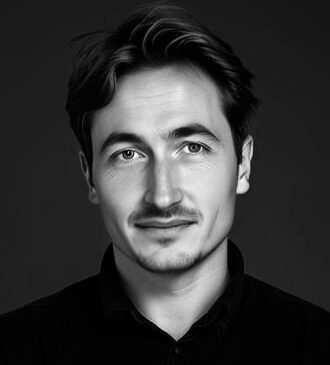
Cedric Cannard, PhD
Research COnsultant
Cédric is a computational neuroscientist whose work spans neuroscience, neuropsychology, biosignal analysis, robust statistics, software development, and machine learning. His research covers brain atrophy, perception, attention, well-being, creativity, predictive processes, altered states of consciousness, wearable neurotechnology, neurofeedback, brain entropy, and brain-heart interactions. He has collected and analyzed hundreds of datasets across EEG (1- to 256-electrode montages), iEEG, ECG, PPG, EDA, body temperature, and voice, and developed open-source tools for advanced M/EEG analysis. He recently served as Director of Research at Evolve, a neurotechnology startup creating VR-based biofeedback for mental health and cognitive training. Cédric currently works as a freelance researcher, research fellow, startup advisor, journal reviewer, EEGLAB moderator, and member of the Global Consciousness Project.
Undergraduate
Sports Science at the University of Toulouse, France.
Graduate
Masters in Clinical and Behavioral Neuroscience and Neuropsychology at the Imaging and the therapeutic strategies for cancers and cerebral tissue (ISTCT) research unit (CEA, CNRS; University of Caen, France)
PhD in Neuroscience at the Brain and Cognition Research Center (CerCo; CNRS; University of Toulouse, France), as part of the Perceptual and Attentional Fluctuations (PAF) team.
Representative Publications
- Cannard C., Brandmeyer T., Wahbeh, H., & Delorme, A. (2020). Self-health monitoring and wearable neurotechnologies. Handbook of Clinical Neurology, 168, 207-232.
- Cannard C., Wahbeh H., & Delorme A. (2021). Electroencephalography correlates of well-being using a low-cost wearable system. Frontiers in Human Neuroscience, 736.
- Cannard C., Wahbeh H. & Delorme A. (2024) BrainBeats as an Open-Source EEGLAB Plugin to Jointly Analyze EEG and Cardiovascular Signals. J. Vis. Exp. (206), e65829, doi:10.3791/65829 (2024).
- Cannard, C., Delorme A. & Wahbeh H. (2024). HRV and EEG correlates of well-being using ultra-short, portable, and low-cost measurements. Progress in Brain Research.
Your ideal research study
Meaningful questions, rigorous methods (controls, randomization, blinding, preregistration, adequate sample size, robust statistics), ethical, reproducible, and communicating findings clearly.
What drew you to consciousness
Studying consciousness’ mysteries offers a path to understand not only the human mind but also the deeper nature of reality and our place within it.
Hobbies
skiing, rock-climbing, tennis, swimming, playing with my kids, friends, drawing/painting, piano.