Virtual Reality Prognostics for Subjective Memory Complaints
October 2024
Received funding for project
April 2025
Began running participants.
1500
Expected total number of participants.
Study Status
- Protocol Design
- Data Collection
- Data Analysis
- Manuscript(s) Preparation
- Publication
Protocol 007
Virtual Reality Prognostics for Subjective Memory Complaints
The increasing prevalence of Mild Cognitive Impairment (MCI) and Alzheimer’s disease among older adults poses a significant challenge to global health systems and the quality of life for millions.
With funding from Pacific Institute of Medical Research, the Institute For Advanced Consciousness Studies will conduct a longitudinal study aimed at 1) establishing a comprehensive registry and database for adults aged 55 and older with subjective memory complaints, and 2) validating novel Virtual Reality (VR) assessments against standard neuropsychological tests.
Building on previous research in cognitive assessment and VR applications, this study will integrate traditional neuropsychological measures (MOCA, ADAS-Cog) with innovative VR-based tasks. These VR tasks are designed to assess allocentric memory, spatial memory, prospective memory, free recall, and spatial navigation in an ecologically valid environment. The research aims to compare the sensitivity and ecological validity of VR tasks to standard neuropsychological tests in predicting real-world cognitive function and decline.
Dark retreat, an ancient contemplative practice gaining modern attention, involves spending time in complete darkness to facilitate profound shifts in perception and consciousness. NBA star Rudy Gobert described his experience as “meditation times a thousand.” The practice puts participants in a dark environment that intentionally frustrates the expression of routine habits and perceptions. This temporary removal of visual input creates a unique contrast medium that allows practitioners to see and feel things normally lost in the light and busyness of daily life. Our research hypothesizes that the disproportionate healing benefits of dark retreat stem from a return to a fundamental state of unaltered consciousness, which we term the “reduction base of innate wholeness” – a core condition of human experience free from external stimuli and learned patterns. While over 17,000 studies exist on mindfulness and diurnal meditations, dark retreat remains largely unexplored scientifically, despite its emergence from secrecy as public figures discover and share its remarkable benefits.
If you volunteer to participate in this study, you are 55 years or older and have expressed complaints in memory and cognition on your screening survey.
You will be asked to:
Online – Fill out questionnaires about your health and medical information, and a series of behavioral trait questionnaires.
In person – complete a series of cognitive assessments commonly used in MCI research and various innovative virtual reality tasks.
Participate in follow-up assessments at regular intervals over the course of 6 months (if signs of MCI) or 1 year (no signs of MCI).
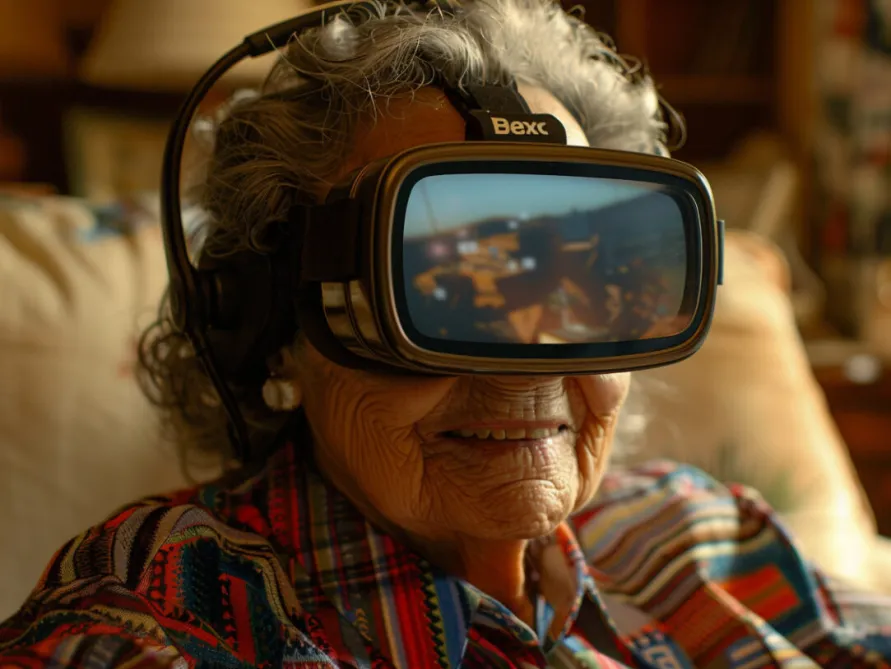
All assessments are non-invasive and do not require any bodily insertions or samples. The virtual reality tasks involve wearing a headset and using hand controllers in a safe, seated position.
This study does not offer compensation. The online surveys will take approximately 1.5 hours to 2 hours. The in-person session should take approximately 1 hour and 15 minutes. You are permitted to withdraw from the study at any time.
The study will take place at the research space for The Institute for Advanced Consciousness Studies at 2811 Wilshire Blvd. Suite 510 Santa Monica, CA 90403.
If you are interested in participating or would like more information, please fill out the survey available here
- Empirical Papers
- Theory Papers
- Talks
- Press
- Posters
2025
- Simonian, N., & Reggente, N. (2026). Beyond the Testing Room: Virtual Reality as a Paradigmatic Solution to Ecological Validity Deficits in Neuropsychological Memory Assessment. Virtual Worlds, 5(1), 7. [PDF]
Project Contributors



Funded By